

The automotive world often views rebadged vehicles with a touch of skepticism. It is a calculated necessity of the industry that allows brands to enter new segments quickly. The Toyota Urban Cruiser Ebella represents this strategy as a sibling to the Maruti Suzuki e Vitara. While the bones are shared, Toyota has attempted to give the Ebella a distinct identity through design.
Design: A Face of Its Own
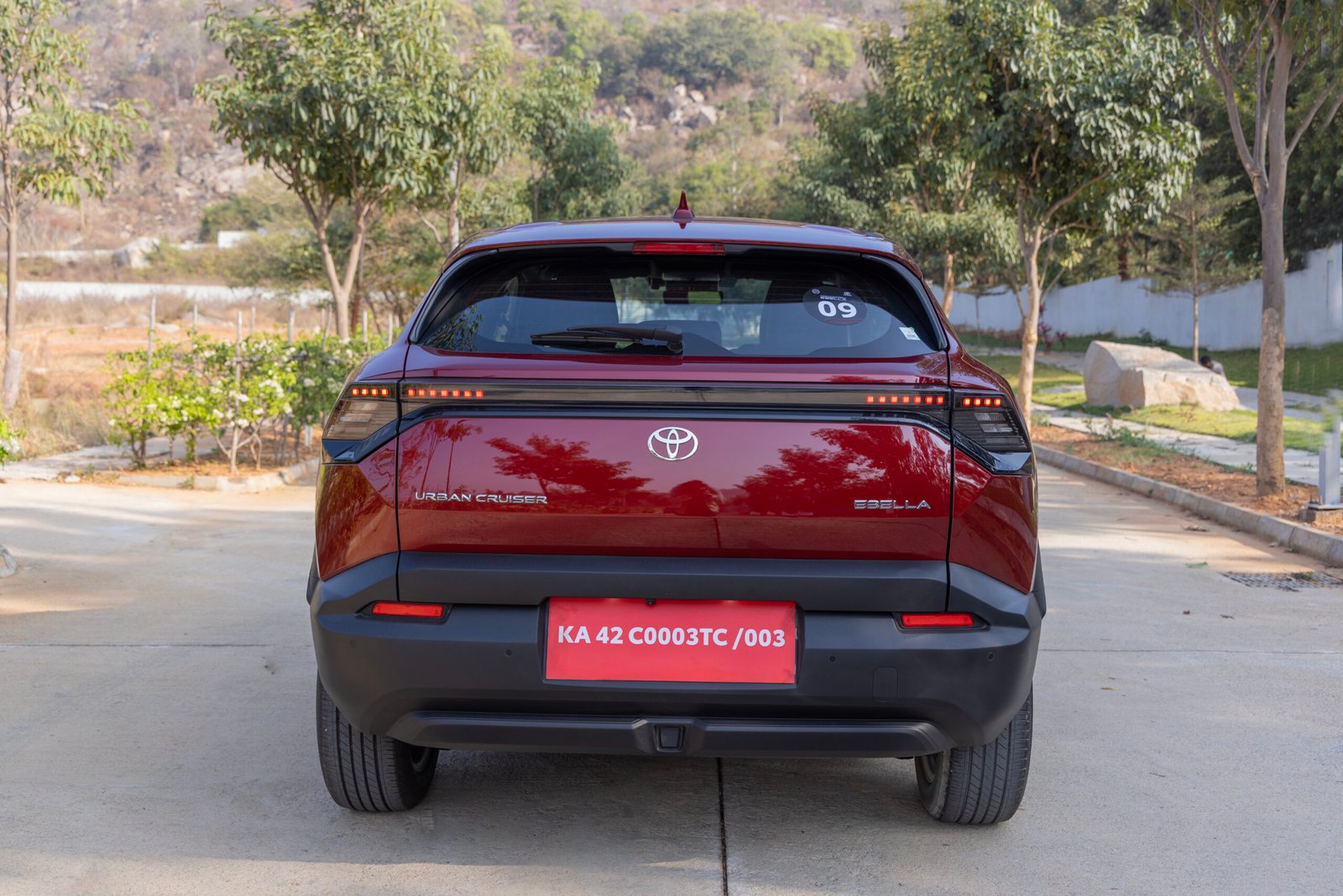
The most significant departure from its Maruti counterpart is the visual language. Toyota has swapped the bulbous front of the e Vitara for what they call a “hammerhead” expression. The slim headlight units paired with segmented LED DRLs give the car a sharp and modern gaze. The bonnet and bumper have been cleaned up to look more premium.
However, the side profile remains identical. This brings us to the rear door handles integrated into the C-pillar. They are an ergonomic nightmare and do not add anything to the aesthetic. At the rear, the updates are subtle with a refreshed lighting signature that mirrors the front.
Interior and Build Quality
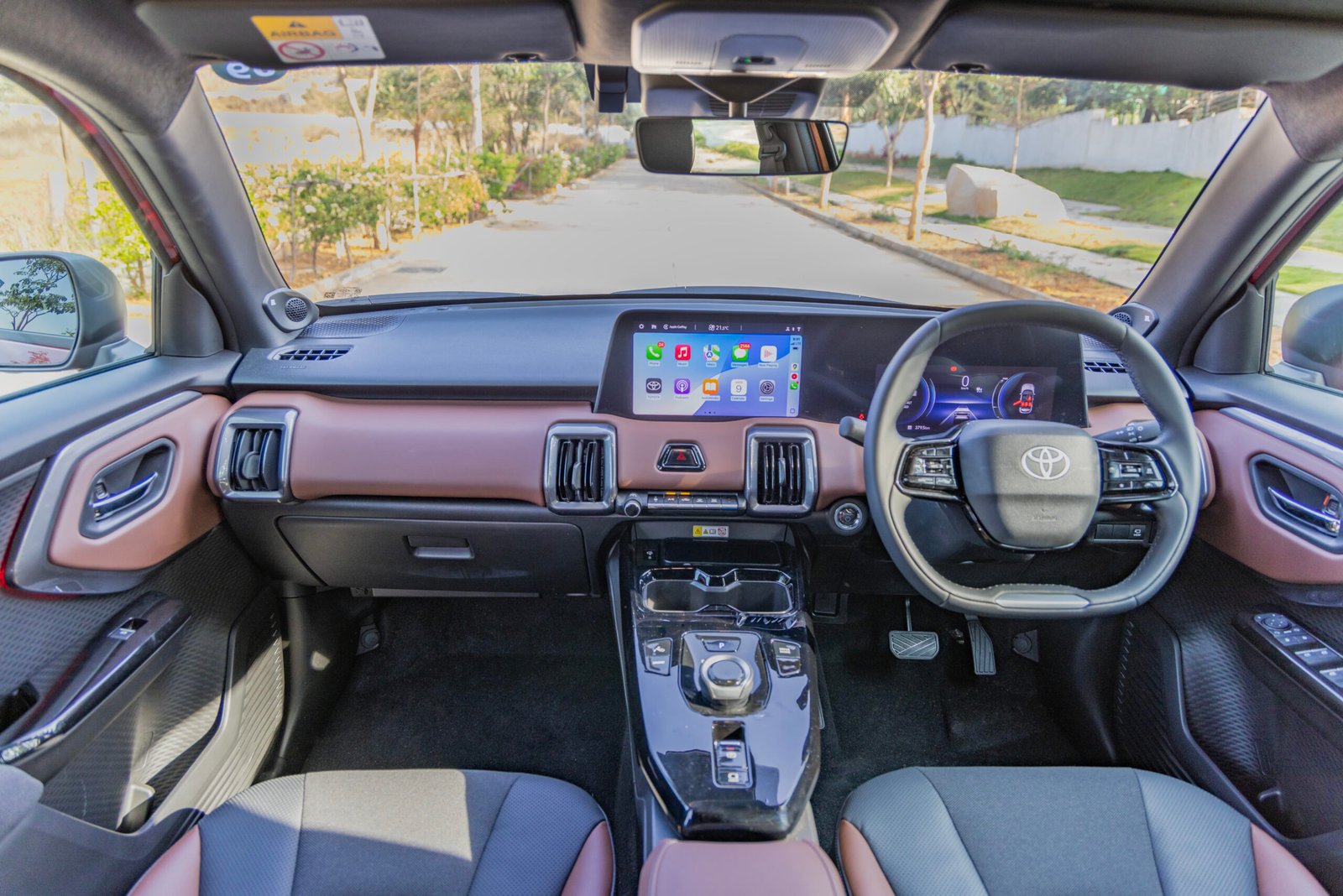
The cabin of the Ebella is a sturdy place to be. Toyota has used a mix of synthetic leather and fabric on the dashboard and door pads. The fit and finish are commendable with no obvious rattles or flimsy panels. It feels built to last which is exactly what you expect from a car carrying this badge.
The ergonomics for the driver are excellent. You get a 10-way electrically adjustable seat and a steering wheel that adjusts for both height and reach. The view of the surroundings is commanding. One glaring issue is the digital instrument cluster. It is surrounded by massive bezels that are easily the largest I have ever seen. It makes a modern screen look dated and small within its housing.
Tech and Infotainment
Technology is a central pillar of the Ebella experience. The 10.1-inch central touchscreen runs Toyota’s Smart Playcast Pro EV software. It supports wireless Android Auto and Apple CarPlay which worked seamlessly during our testing.
The highlight for audiophiles is the 9-speaker JBL system. It includes a dedicated IP speaker on the dashboard and a subwoofer. The sound quality is punchy and clear. However, it has to compete with a cabin that lets in a lot of wind and tire noise. For a car in this price bracket, the NVH levels are higher than they should be.
A major tech oversight is the lack of physical controls for the regenerative braking. There are no paddle shifters and you cannot adjust the levels via the central console buttons. You have to dive into the touchscreen menus to change regen settings. This is a frustrating user experience for a feature that should be accessible on the fly.
Performance
I drove the top-spec E3 variant which features the 61 kWh battery pack. With 172 hp and 193 Nm of torque, the performance is brisk. It does not offer neck-snapping acceleration but it is more than adequate for daily life. Overtaking fast-moving traffic on the highway is easy and the power delivery is linear.
While I could not perform a full range test, the efficiency figures suggest that a real-world range of 400 km is achievable on a full charge. This makes it a viable option for both city commutes and occasional highway runs.
Ride and Handling
The ride quality is where the Ebella shows some weakness. The suspension setup is firm and bouncy. At low speeds, you feel every bump even if the suspension doesn’t crash through them. As you go faster, this bounciness gets magnified. On uneven Indian roads, the car can feel unsettled which makes it uneasy for passengers, especially those in the back.
The steering has a decent weight to it which gives the driver some confidence. On the handling front, there is a noticeable amount of body roll. The handling is safe and predictable but it is not a car you would call fun to drive.
Verdict
The Ebella sits in a segment with some formidable rivals like the Tata Curvv EV, the Hyundai Creta Electric, the Mahindra BE 6, the MG ZS EV, and of course its Maruti Suzuki sibling. Some of these options trump the Toyota on parameters like rear-seat comfort or feature list. The rear seat in the Ebella lacks under-thigh support and the backrest is too upright for long-distance comfort.
However, the Ebella draws people in with its looks and the promise of the Toyota ownership experience. If you value brand reliability and prefer this sharper design over the e Vitara, the Ebella is a decent car to buy. But outside of that, there aren’y many reasons to pick the Toyota, or for that matter, the Maruti Suzuki.